One of the biggest barriers to patent education is not the law itself—it’s the paperwork. Patent applications have a reputation for being dense, technical, and difficult to interpret. In this second entry of the Patent Education Series, we’ll break down what a patent application actually is, how it’s structured, and why the details inside it matter far more than most people expect.
From Idea to Patent Application
An idea alone is not patentable. To move toward protection, an invention must be clearly described in a formal patent application. This document is not just a filing requirement—it becomes the permanent public record of how your invention works and what legal boundaries surround it.
In the United States, patent applications are submitted to the United States Patent and Trademark Office, where they are examined for compliance with patent law.
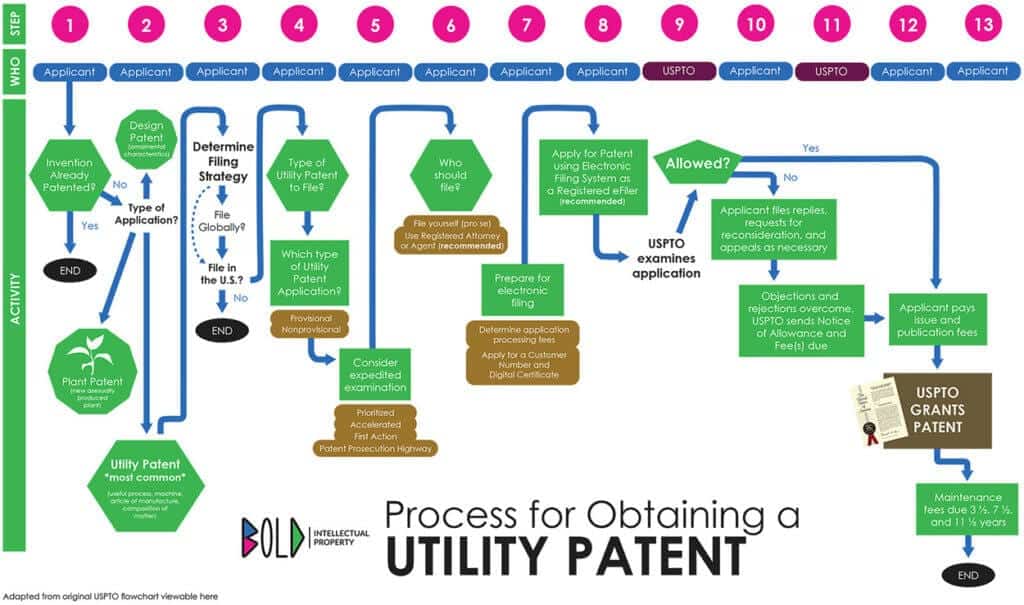
Provisional vs. Non-Provisional Applications
There are two common filing paths for utility patents:
- Provisional applications
These establish an early filing date but are never examined or granted on their own. They are often used as a temporary placeholder while development continues. - Non-provisional applications
This is the formal application that gets examined and can ultimately become an issued patent.
Understanding the difference is an important part of patent education, especially for inventors and startups planning timelines and budgets.
The Core Parts of a Patent Application
A patent application is made up of several key sections, each serving a specific role:
- Specification
The written description of the invention, explaining how it works in enough detail that someone skilled in the field could understand it. - Drawings
Visual representations that support the written description. These are often essential for clarity. - Claims
The most important—and most misunderstood—section. Claims define the legal boundaries of the invention. They determine what is actually protected. - Abstract
A short summary used primarily for classification and searching.
While all sections matter, claims ultimately control the scope of patent rights.
Why Wording Matters So Much
Patent applications are not evaluated based on intent or effort. They are evaluated based on what is written. Small wording choices can dramatically change how an invention is interpreted during examination and enforcement.
This is why patent education emphasizes structure and precision rather than just the idea itself. A well-written application can be the difference between meaningful protection and none at all.
Patent Education Beyond Filing
You don’t need to draft applications yourself to benefit from understanding them. Knowing how patent applications are structured helps inventors collaborate effectively, helps founders make strategic decisions, and helps technical professionals communicate clearly with legal teams.
In the next article of the Patent Education Series, we’ll explore what happens after an application is filed—and how the patent examination process really works behind the scenes.