The infrastructure behind the program
The MPEP Infrastructure Behind Wysebridge
Wysebridge does more than link students to a PDF of the Manual of Patent Examining Procedure. The platform uses a structured MPEP corpus that breaks the manual into searchable sections, resolves statutory and regulatory references, tracks revisions, and connects course explanations back to the underlying source.
That infrastructure powers several parts of the Patent Bar study experience: section-level citations, electronic MPEP search, the AI tutor, question explanations, revision review, and the MPEP tools used during simulation.
The MPEP is the central reference for the USPTO registration examination, but it is not the only current examination source. For the complete list, see the current USPTO exam source materials.
What Wysebridge Has Structured
The current Wysebridge corpus indexes more than 10,000 MPEP sections across the manual's chapters and appendices. Instead of treating each chapter as one large document, the system resolves the manual down to individual sections and subsections such as MPEP 2106, 706.02(b), or 2106.04(a)(2).
That matters because Patent Bar study happens at the rule level. A lesson or answer explanation should be able to point you to the specific provision that supports the explanation, not merely to a 100-page chapter PDF.
Corpus figures on this page are Wysebridge operational numbers, not USPTO statistics. They can change as the corpus is rebuilt or the USPTO revises the manual.
How the corpus is built
None of this is visible in a lesson. All of it is what lets lessons, explanations, and tutor answers point back to a specific, checkable source.
Section-Level MPEP Citations
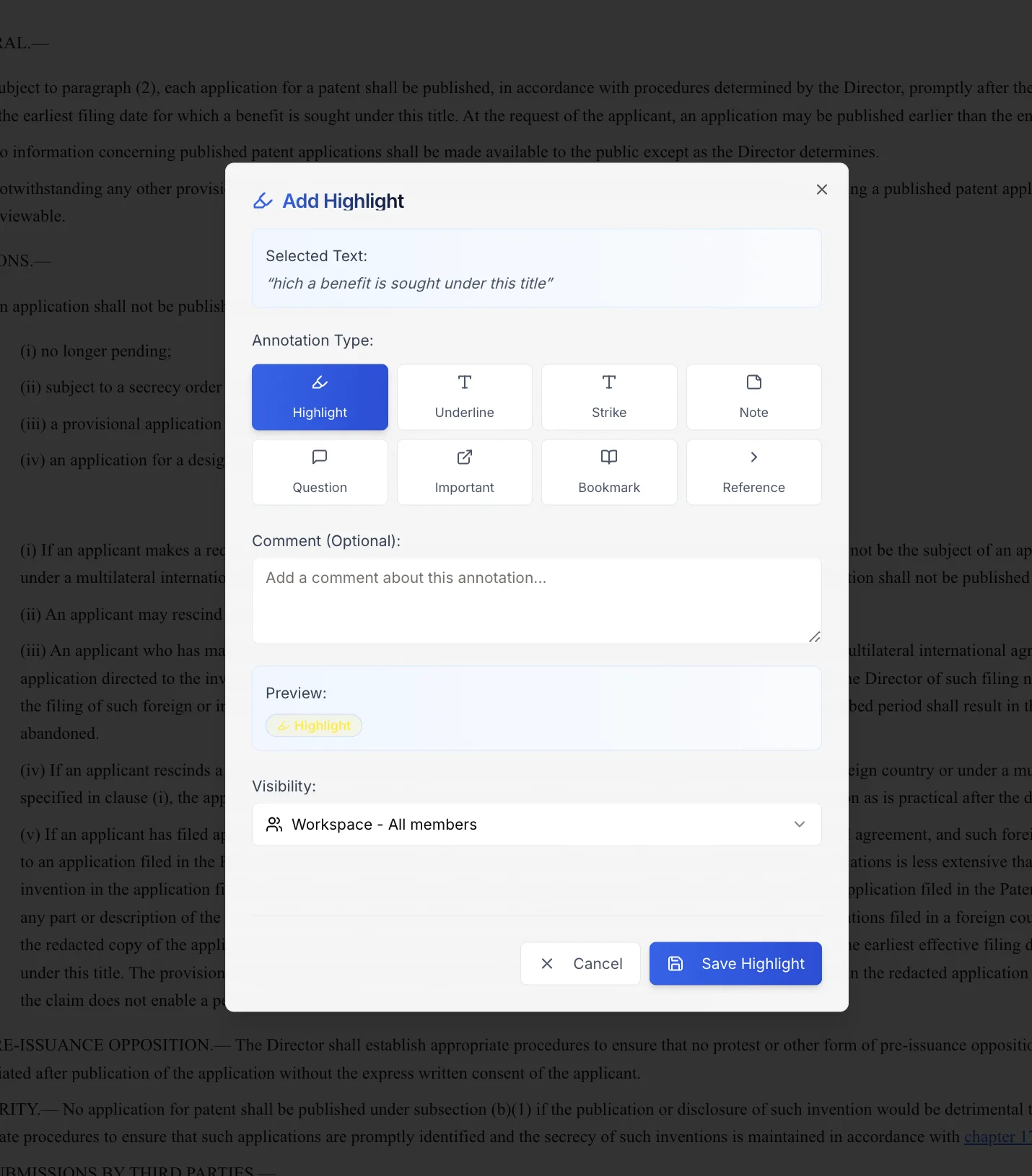
Wysebridge parses the MPEP into individual sections so course content can cite the rule at the level a student actually needs to review.
For candidates, the benefit is straightforward: when a practice-question explanation cites an MPEP section, the student can move directly to the relevant source instead of manually searching a large chapter document.
- Lessons can link to the controlling section.
- Question explanations can cite the source behind the answer.
- AI tutor responses can point to a section for verification.
- Students can build familiarity with the same section numbers they will use during exam preparation.
Statutes and Rules Resolved to Individual Provisions
The MPEP frequently cites 35 U.S.C. and 37 C.F.R. provisions. Wysebridge's structured corpus resolves those references to individual statutory and regulatory provisions rather than leaving them buried in long appendices.
That helps students understand the relationship between the MPEP explanation and the underlying law. It also reduces the amount of document navigation required when a question turns on a specific statutory or regulatory provision.
Revision-Aware Source Tracking
The USPTO publishes revision indicators throughout the MPEP and maintains archived editions. Wysebridge uses its indexed corpus to compare revisions at the section level and identify which course materials cite affected sections.
For Patent Bar candidates, the important distinction is between the USPTO's publicly current MPEP and the edition designated for the registration examination. As of September 2026, the USPTO identifies MPEP Ninth Edition, Revision 01.2024 as an examination source, together with additional listed materials.
The public MPEP page also notes later notices and guidance that supersede portions of the current manual for general USPTO practice. Those notices do not automatically become Patent Bar examination material unless the USPTO includes them in the registration-exam source list.
Monitoring for USPTO Changes
The corpus is checked against the USPTO's published manual on a weekly cycle. Because the manual is structured at the section level, changed sections can be identified and the course content that depends on them flagged for targeted review.
Study from source-linked lessons and explanations.
Section-level citations, electronic MPEP search, and the AI tutor are part of the Wysebridge program.
What it changes for you
How This Changes the Student Experience
Source-Linked Explanations
A strong practice explanation should tell you not only which answer is correct, but where the governing rule comes from. Section-level source links make that verification faster and encourage a study habit that transfers to the open-reference exam.
AI Tutor Answers That Can Be Checked
Wysebridge's AI tutor uses the structured corpus to ground explanations in MPEP text and cite the section used. That does not make an AI answer authoritative over the USPTO. The value is traceability: you can inspect the cited source and confirm the rule. The MPEP is also not the complete universe of testable material, so check the current USPTO exam source materials as well.
See the MPEP-grounded AI tutorFaster MPEP Study Search
During ordinary study, Wysebridge provides faster structured search and navigation than a chapter PDF. That helps you learn where rules live and move between related sections more efficiently. Exam-day preparation should still include practice with the more constrained reference-search environment used in the Patent Bar exam simulator.
Try the MPEP simulatorRevision Context
Because prior editions remain indexed, Wysebridge can distinguish older wording from the tested edition and identify when an explanation depends on a section that changed. That is particularly useful when working with historical Patent Bar questions, many of which predate the America Invents Act and later MPEP revisions.
Review released USPTO exam questionsExam currency
Which MPEP Edition Is Currently Tested?
As of September 2026, the USPTO's registration-examination source materials identify MPEP Ninth Edition, Revision 01.2024, published in November 2024. The USPTO also lists additional examination materials, including the Consolidated Trial Practice Guide, representation-rule materials, and Global/IP5 Patent Prosecution Highway materials.
Candidates should check the official USPTO source-material list regularly. The Office specifically warns that examination materials may be revised, including during an applicant's examination window. Our page on current USPTO exam source materials summarizes the list.
Is the Public USPTO MPEP the Same as the Tested Material?
Not necessarily in every respect. The USPTO's public MPEP page is the authoritative source for the current manual used in patent practice and can include later notices that supersede parts of Revision 01.2024. The registration examination, however, is tied to the source materials OED expressly identifies for the test.
For study purposes, treat the exam-tested edition and later USPTO practice updates as separate things, rather than calling one version "current" without context.
Why This Infrastructure Is Different From a PDF Library
A PDF library gives students the source document. Structured infrastructure gives the rest of the platform a consistent way to cite, search, compare, and retrieve that source.
That distinction matters because the MPEP touches almost every major Wysebridge feature:
- Course lessons cite specific sections.
- Practice explanations link back to source material.
- The AI tutor can return traceable MPEP citations.
- Search tools operate on structured sections rather than only chapter files.
- Revision tracking can identify source-dependent course content.
- Historical-question review can distinguish older rules from current tested law.
Go deeper
To learn how to use the MPEP itself, chapter by chapter, see our MPEP guide. To see how this foundation fits into the full Patent Bar prep course, browse the Wysebridge features.
Where eMPEP came from
One corpus, three audiences
Wysebridge has spent years preparing candidates for the USPTO registration examination, and doing that well meant solving the MPEP itself — parsing it, structuring it, tracking it across revisions, and keeping it current. That work became eMPEP. The same corpus now serves three audiences: candidates studying for the exam, practitioners researching a point of procedure, and developers building on our API. It is maintained because we depend on it ourselves — not as a dataset we licensed and resold.
For developers: the MPEP API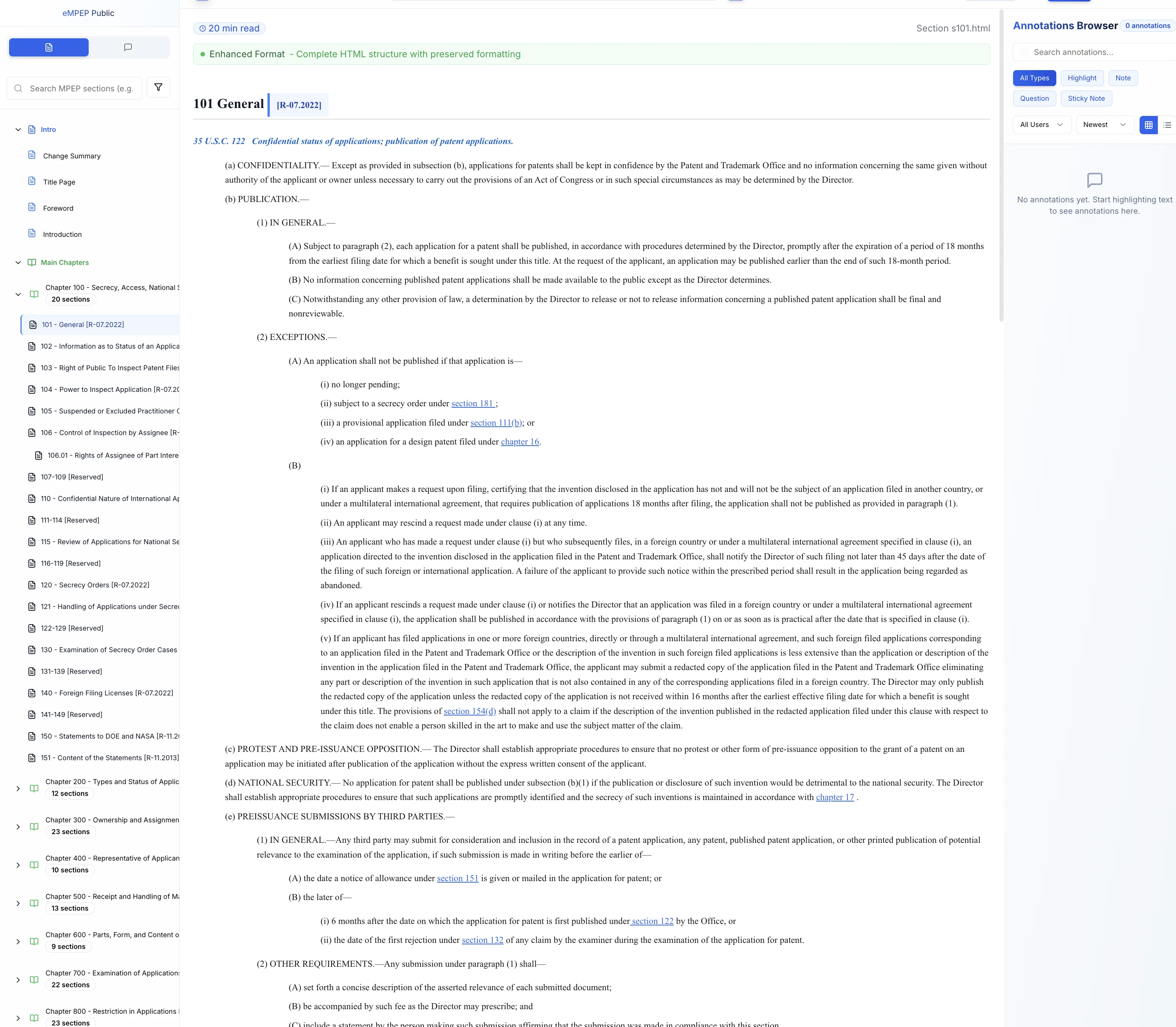
Pass rate vs USPTO overall pass rate
2012–202581% first-attempt pass rate (Wysebridge, 2012–2025 average) · 47% USPTO average (2012–2025)
| Year | USPTO overall | Wysebridge | Difference |
|---|---|---|---|
| 2012 | 54% | 89% | +35 pp |
| 2013 | 47% | 84% | +37 pp |
| 2014 | 43% | 84% | +41 pp |
| 2015 | 48% | 83% | +35 pp |
| 2016 | 47% | 79% | +32 pp |
| 2017 | 43% | 77% | +34 pp |
| 2018 | 47% | 77% | +30 pp |
| 2019 | 45% | 81% | +36 pp |
| 2020 | 49% | 82% | +33 pp |
| 2021 | 45% | 79% | +34 pp |
| 2022 | 46% | 81% | +35 pp |
| 2023 | 46% | 80% | +34 pp |
| 2024 | 49% | 80% | +31 pp |
| 2025 | 46% | 78% | +32 pp |
“I passed on my first attempt using only Wysebridge for study materials. I had a limited amount of time to study for the exam, so I needed to make the most of it. What really stands out to me about the Wysebridge system is how efficient it is. The Patent Bar is equal parts skill and knowledge — and Wysebridge delivers both.”
Keep reading
FAQ
MPEP Infrastructure FAQs
Wysebridge's Patent Bar materials are grounded in the USPTO-published MPEP edition identified for the registration examination. As of September 2026, that is Ninth Edition, Revision 01.2024. Candidates should verify the current exam source list directly with the USPTO.
No. It is the central source, but the USPTO currently lists additional examination materials, including the Consolidated Trial Practice Guide, representation-rule materials, and Global/IP5 Patent Prosecution Highway materials.
Wysebridge checks the corpus against the USPTO's published manual on a weekly cycle. Changed sections can then be identified and the course content that cites them reviewed.
Yes. The USPTO provides the MPEP free in searchable, HTML, and PDF formats. Wysebridge's value is not exclusive access to the manual; it is the way the source is structured and connected to lessons, practice, analytics, AI tutoring, and exam preparation.
Explore the MPEP Tools
Use the MPEP guide for chapter-level study guidance, the Exam Simulator for timed reference lookup, and the Features page to see how source-linked explanations, AI tutoring, and analytics fit into the broader Wysebridge platform.